
Germany
Your guide to life, work and study in Germany.
Population
83,467,117
31.12.2025
Pay and the statutory minimum wage
€13.90
Gross/hour since 1 Jan 2026
Median gross monthly pay
€4,217
2025
Gross monthly pay: middle 50% range
€3,207–5,694
2025 · middle 50%
83,467,117 residents on 31 December 2025, according to Destatis estimates based on the 2022 Census. The 2025 median gross monthly pay was €4,217. The interquartile range (25th to 75th percentiles), which contains the middle 50% of pay values, was €3,207–€5,694. The data cover the Federal Employment Agency’s core group of full-time employees subject to social security contributions, excluding trainees and cases covered by special statutory rules. These are gross figures, not take-home pay or guaranteed salaries for every occupation.
Articles
 Work in Europe
Germany Opportunity Card 2026: Eligibility & Application
Learn who qualifies for Germany’s Opportunity Card, how the points route works, what funds and documents you need, and how to apply to look for work in Germany.
 Asylum in Europe
Safe Countries in Germany in 2026: National and EU Lists and Asylum Rights
Understand Germany’s national safe-country list, the separate EU list introduced in 2026, and what the designation means for individual asylum claims and appeals.
 Asylum in Europe
DV Lottery 2027 from Germany: Status, Rules and Eligibility
Updated 21 November 2026: DV-2027 remains closed. Germany-specific guidance on eligibility, passport requirements, fees, consular processing and asylum cautions.
 Asylum in Europe
BAMF Asylum Interview in Germany: Preparation, Rights and Common Mistakes
A practical guide to the German BAMF asylum hearing: what happens, how to prepare truthfully, interpreter rights, reviewing the record and official legal resources.
 Asylum in Europe
Asylum Rejected in Germany? Appeal Deadlines, Legal Remedies and What to Do Next
A practical guide to a BAMF asylum refusal in Germany: decision types, court deadlines, urgent interim relief, and realistic options after rejection.
 Asylum in Europe
Vocational Training in Germany After Asylum Rejection: Section 16g and Ausbildungsduldung
Can you continue or start an Ausbildung after an asylum refusal in Germany? Understand Section 16g, Section 60c, identity rules, training contracts, deadlines and exclusions.
 Daily life
Driving Licence in Germany 2026: The Complete Guide [Exchange, New Licence, Costs & Tests]
Practical guide to getting a driving licence in Germany in 2026: exchanging a foreign licence, getting a new licence from scratch, all costs, theory and practical tests, driving lessons, instructor tips, and how to avoid common mistakes.
 Study in Europe
Study in Germany 2026: admission, student visa and costs
Updated guide to studying in Germany: qualification checks, university admission, language, uni-assist, tuition exceptions, blocked accounts, student insurance, work rules and scholarships.
 Daily life
Taxes in Germany 2026: The Complete Beginners' Guide [Tax Types, Tax Return & Refund]
A clear, practical guide to understanding the German tax system in 2026: tax ID, tax number, types of tax, tax classes, income tax, payroll tax, step-by-step tax return, maximizing your refund, and avoiding common mistakes. For new residents, employees, and self-employed.
 Living in Europe
German Citizenship 2026: Requirements & 5-Year Rule
German naturalisation in 2026: five-year rule, B1 German, eligible permits, income, test, dual citizenship, spouse route, fees and application steps.
 Work in Europe
Best Job Sites in Germany 2026: A Practical Guide
Compare German job boards by sector and language, find official portals, and learn how international applicants can apply safely and check work-permit rules.
 Asylum in Europe
Deportation from Germany 2026: Procedure, Duldung and Legal Rights
Understand Germany’s duty to leave, enforceable removal, Duldung, Dublin transfers, training and work routes, and urgent legal remedies without false promises.
 Asylum in Europe
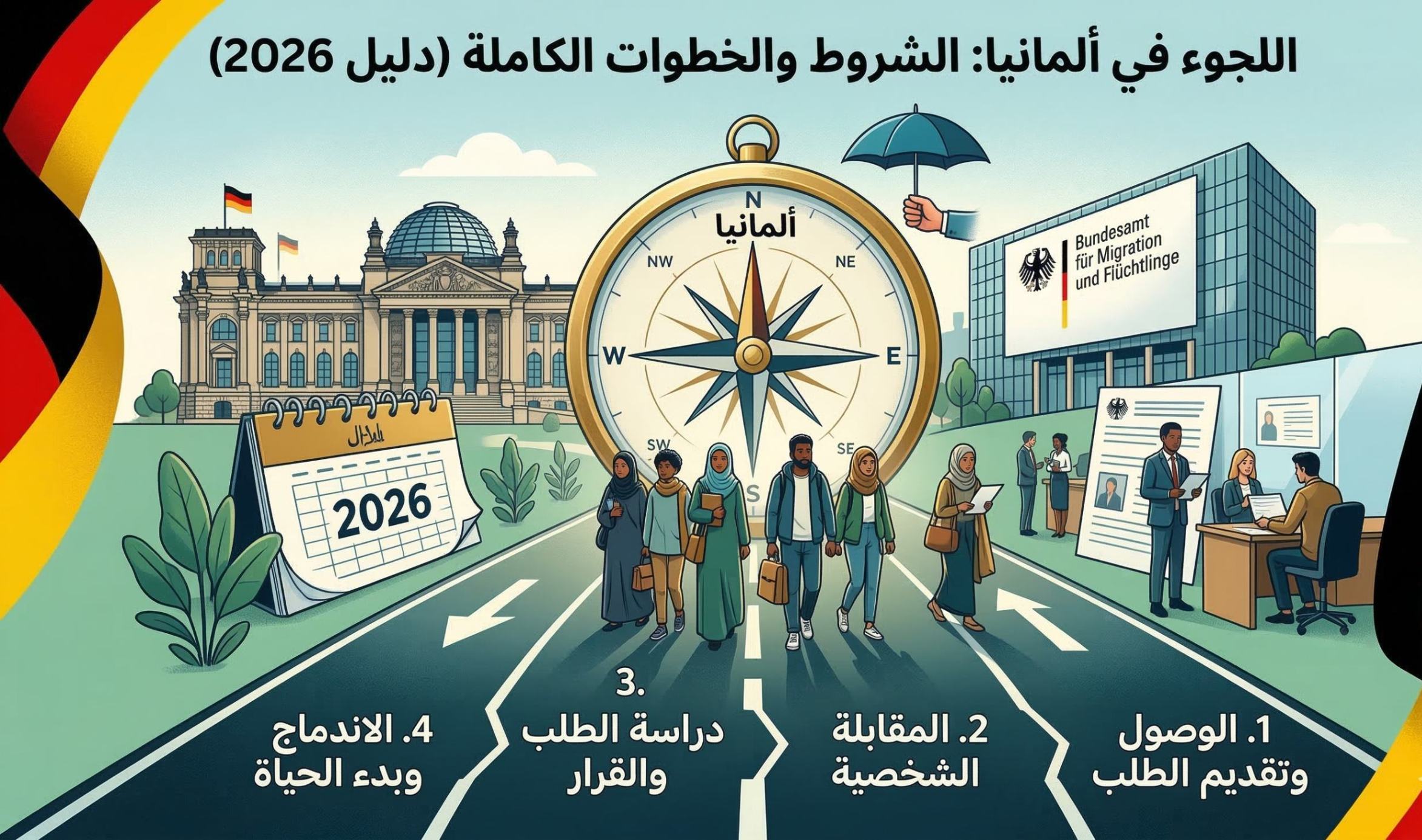
Asylum in Germany 2026: Requirements, Procedure and Rights
An updated guide to asylum in Germany: protection types, registration and BAMF, interviews, 2026 AsylbLG benefits, Bezahlkarte, work access, family reunification and appeals.
 Study in Europe
Germany scholarships 2026: DAAD, EPOS and Erasmus Mundus
A current guide to funding study in Germany: DAAD and EPOS eligibility and stipends, political foundations, Deutschlandstipendium, Erasmus Mundus, BAföG limits and application steps.
 Asylum in Europe
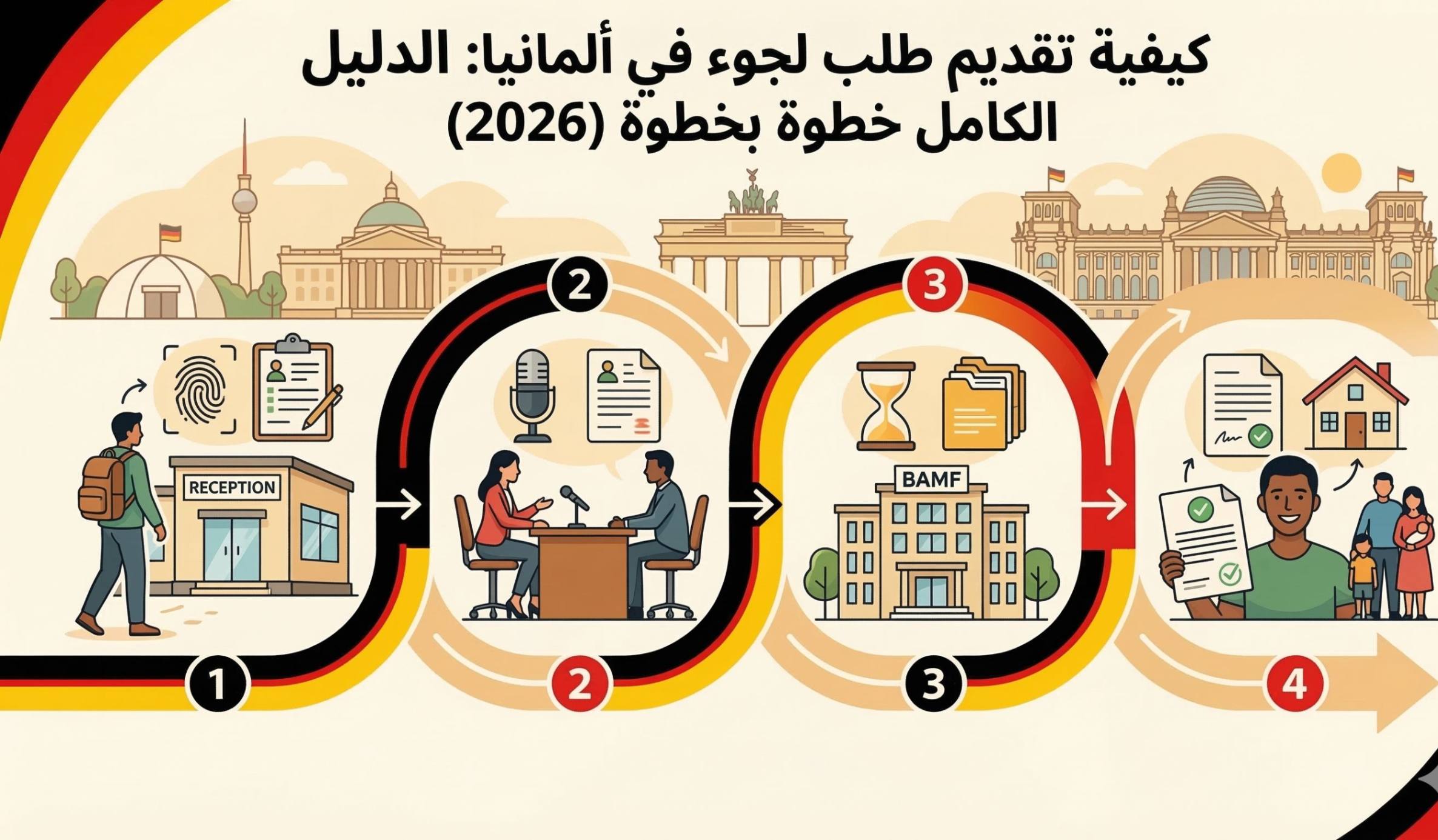
How to Apply for Asylum in Germany in 2026: Step by Step
How to apply for asylum in Germany: registration, BAMF application, arrival documents, interview, AMMR rules, work access and appeals.
Germany: A Practical Guide to Living, Working and Studying
A practical starting point for residents, students, job seekers and newcomers. This guide brings together core country information, official statistics and links to the specialist guides already published on this website.
Germany at a glance
- Capital
- Berlin
- Official language
- German
- Currency
- Euro (€)
- Political system
- Federal parliamentary republic
Federal system and 16 states
Germany is a federal republic made up of 16 states (Länder). States have responsibilities in areas such as education, policing and parts of public administration, so local rules and services can differ. Berlin is the capital and the seat of major federal institutions.
Working and finding a job
Finding suitable work depends on your qualifications, experience, language skills and, where required, formal recognition of your credentials. Regulated professions such as many healthcare occupations usually require a licence to practise. Holders of foreign qualifications may need a recognition or equivalence procedure.
Asylum and international protection
Asylum applications in Germany are assessed under German law and the European protection framework. The Federal Office for Migration and Refugees (BAMF) examines applications. Outcomes, rights and procedures depend on the individual facts, the type of protection and the procedural stage; submitting an application does not guarantee residence or permission to work. Anyone facing a refusal or removal decision should seek qualified legal advice promptly because appeal deadlines can be short.
Permanent residence and citizenship
Permanent residence and naturalisation have different routes and requirements concerning residence duration, permit type, language, ability to support oneself, integration and legal record. There is no single qualifying period or rule that applies to everyone. Eligibility depends on the residence status and individual circumstances as well as current legislation. Check with the competent authority or a qualified adviser before applying.
Taxes and financial obligations
Tax obligations depend on tax residence, income sources, family circumstances and employment status. Wage tax is generally withheld from employees' salaries, while an annual tax return may be required depending on the situation. Self-employed people have different obligations, potentially including income tax, VAT and business registration. This is general information, not an individual tax calculation.
Are there skills shortages?
The Federal Employment Agency's 2025 analysis identified bottlenecks in 157 occupational groups, particularly nursing and healthcare, construction and skilled trades, cooking, professional driving and early-years education. The Agency also said there is no evidence of a general labour shortage. Software development was no longer classified as a shortage occupation in the 2025 analysis. This list is not a promise of employment.
Pay and the statutory minimum wage
Since 1 January 2026, the general statutory minimum wage has been €13.90 gross per hour. It is scheduled to rise to €14.60 on 1 January 2027. The 2025 median gross monthly pay was €4,217. The interquartile range (25th to 75th percentiles), which contains the middle 50% of pay values, was €3,207–€5,694. The data cover the Federal Employment Agency’s core group of full-time employees subject to social security contributions, excluding trainees and cases covered by special statutory rules. These are gross figures, not take-home pay or guaranteed salaries for every occupation.
Studying and universities
Germany has research universities, universities of applied sciences and vocational pathways. Admission usually depends on a recognised school-leaving qualification, programme-specific and language requirements, and proof of funds when applying for a study visa. Programmes may be taught in German or English. Tuition: Public higher-education institutions generally charge no tuition for most bachelor's and many master's programmes, but exceptions apply. Baden-Württemberg generally charges non-EU/EEA students €1,500 per semester for specified degree programmes, and some Bavarian institutions may set their own fees for non-EU/EEA students. Public universities also charge a semester contribution. Private institutions and some continuing-education programmes may charge higher fees. Proof of funds: the federal government’s study-visa information states that a blocked account requires €11,904 for 2026. Confirm the current amount and documentation with the official authority and German mission before applying.
Visas and residence permits
The appropriate visa or residence title depends on the purpose of stay, such as qualified employment, study, vocational training or family reunification. Work routes include the EU Blue Card, the skilled-worker visa and, where eligibility criteria are met, the Opportunity Card for job searching. Recognition of qualifications is required for some occupations, especially regulated professions. After moving into accommodation in Germany, residents generally have to register their address with the local registration office within two weeks. The responsible office and practical process depend on the municipality. Keep the registration certificate for other administrative procedures.
Health insurance and healthcare
Health insurance is compulsory for people residing in Germany. Coverage is provided through statutory or private health insurance depending on a person's circumstances and eligibility. Statutory insurance members are also covered by social long-term-care insurance. Do not assume healthcare is free or that everyone can choose either system.
Living costs and housing
Costs vary considerably with the city, housing type, household size, insurance and lifestyle. Large cities and university or employment hubs can have more competitive rental markets. This guide does not publish fixed city-cost estimates without a recent, comparable statistical series. Build a budget using current local rents, utilities and your own circumstances.
Cities people often compare
Berlin, Munich, Hamburg, Frankfurt, Cologne, Stuttgart, Düsseldorf and Leipzig are common destinations. No single city is best for everyone: compare jobs or universities, rent, transport and the language requirements of the state and employer.
Arab communities in Germany
We do not publish a single total for the Arab community because German official statistics primarily classify residents by citizenship, country of birth or migration-related characteristics, rather than one unified 'Arab' category. Arab identity may include people of many nationalities as well as German citizens of Arab heritage. A single number without a clear statistical definition would be misleading.
Practical steps before moving
Check the visa route through an official government source, arrange certified translations or recognition of qualifications where needed, start learning German, prepare a realistic initial budget and look for accommodation carefully. Verify recruitment agencies and their fees before paying. After arrival, complete address registration, health-insurance arrangements and other procedures relevant to your residence status.
Related guides on Arab in Europe
Official sources
- Destatis – population on 31 December 2025
- European Union – Germany: capital, language, federal system and 16 states
- Federal Employment Agency – shortage analysis 2025
- Federal Ministry of Labour – statutory minimum wage
- Federal Employment Agency – median pay in 2025
- Federal Employment Agency – 2025 earnings distribution and quartiles
- Make it in Germany – Skilled Immigration Act
- Make it in Germany – study visa and proof of funds
- DAAD – tuition fees and study costs
- Federal Ministry of Health – statutory health insurance
- Make it in Germany – housing and address registration
This guide provides general information, not legal or tax advice and not confirmation that you qualify for a visa. Laws, fees and requirements change. Always check with the competent authorities and the German mission before making decisions or payments.
Editorially reviewed: 16 November 2026. The reference year is stated next to each statistic.