Asylum Refusal Reasons in the UK: 20 Common Causes and How to Avoid Them (2026 Guide)
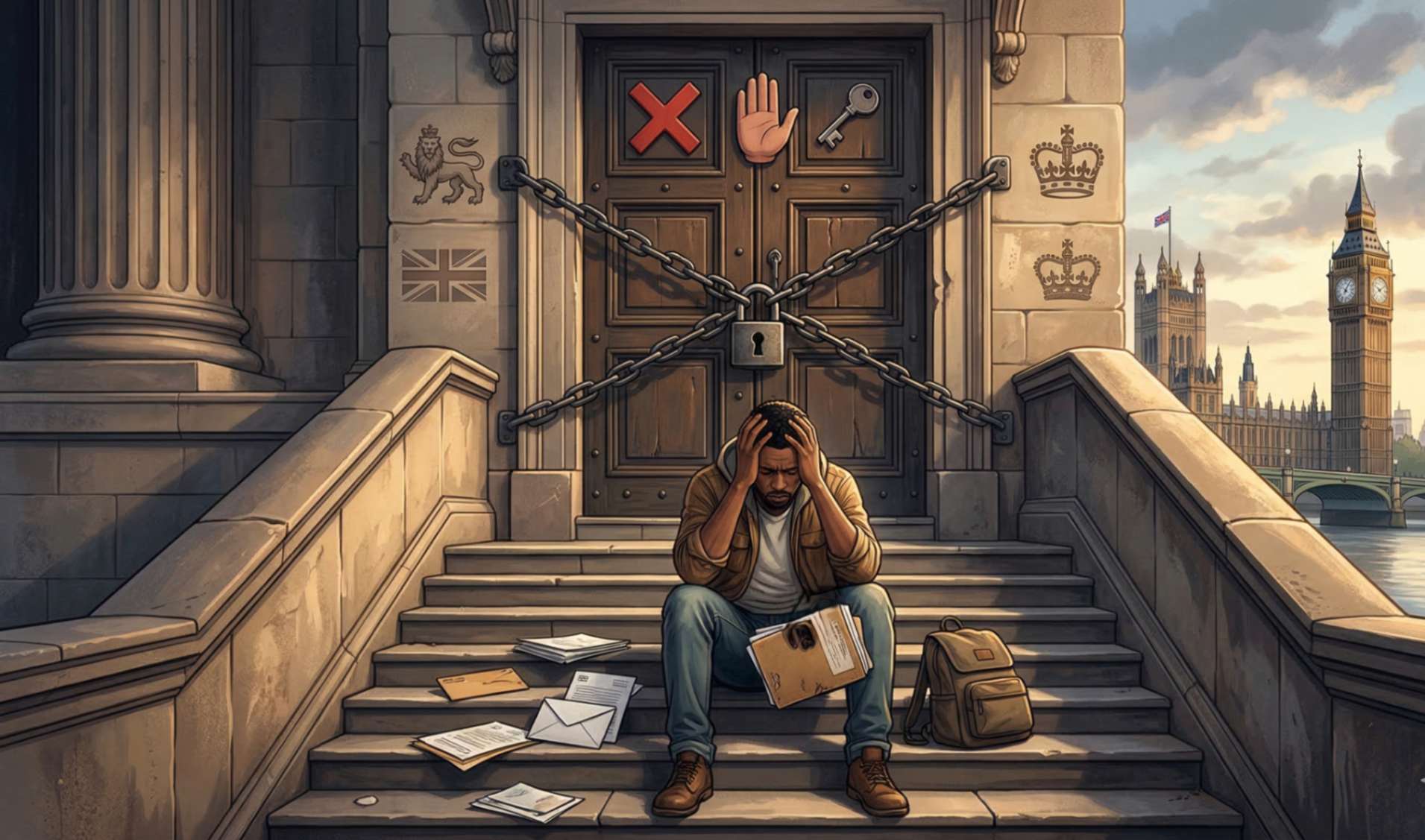
Important legal notice and responsibility: This guide is a preventive awareness resource based on real practice built over years of representing asylum seekers before the UK Home Office and immigration courts (First-tier Tribunal). It is designed to educate you about the fatal mistakes we see every day — but it is not a substitute for individual legal advice. Every asylum case is unique. If you are facing a refusal decision or preparing for an interview, you should urgently instruct a qualified immigration professional (OISC registered or Solicitor).
Asylum Refusal Reasons in the UK: 20 Common Causes and How to Avoid Them (2026 Guide)
1. Introduction: Why is an asylum claim refused?
Asylum in the UK is not a lottery ticket you win by simply reaching the shores of Dover. It is a tough legal battle to prove that you are entitled to protection.
The language of numbers does not lie: thousands of applications are refused each year in the United Kingdom. But based on my experience of more than 12 years working as a lawyer in legal support organizations for migrants, I can confirm a shocking truth: a large share of these refusals were not because people did not deserve protection, but because they made procedural or “tactical” mistakes when submitting their files.
The UK Home Office approaches your application with a basic assumption: “skepticism”. The interview officer’s job is to find gaps in your story to refuse your claim.
In this warning guide, I will put in front of you the “black list” of the 20 most common reasons that lead to asylum refusal, and I will explain exactly how to strengthen your file and avoid these fatal traps.
To build your path correctly, also read: How to Apply for Asylum in the UK: Complete Step‑by‑Step Guide and Asylum in the UK: Complete Conditions and Steps.
2. Reasons related to credibility and honesty (Credibility)
This is the first and most dangerous reason for refusal. If the officer loses trust in you, you lose the case.
2.1 Lying or Exaggeration of details
- Explanation: Immigration officers are trained in advanced psychological interview techniques. If they discover even one lie (even about a seemingly trivial matter), they apply a legal principle called (Damage to Credibility), which destroys your entire true story.
- Real example: An asylum applicant claimed that a militia set fire to his shop on a specific date. The officer checked satellite images (Google Earth Historical Imagery) and found that the building was intact two months after that date! The claim was refused immediately.
- ⚠️ Warning: Do not invent dramatic events to make your claim stronger. A simple, well‑documented truth is more powerful than a complex lie.
2.2 Inconsistencies in the story
- Explanation: Comparing what you said during the initial short screening interview and what you will say months later in the substantive interview is the biggest trap.
- Example: At first you said you escaped in “winter”, but in the main interview you said you escaped in “August”. This contradiction is enough for refusal.
- How to avoid it? Ask your lawyer for a copy of the screening interview record and study it carefully before the substantive interview.
2.3 A vague and lacking-detail story
- Explanation: The Home Office rejects stories that look like they were copied “from Wikipedia”. If you come from a specific city and claim you participated in a protest, they will ask you to describe the street, the weather that day, and the names of the squares.
- Example: Saying “They arrested and tortured me” without explaining the details of the cell, the names of investigators (if known), and the nature of the questions you were asked is too vague and will be refused.
2.4 Unjustified delay in claiming asylum
- Explanation: Section 8 of the immigration law explicitly states that delay in claiming asylum harms your credibility. If you feared for your life, why did you hide in the UK for three years as a student or worker before claiming asylum?
- ⚠️ Warning: Submit your claim on the same day you arrive, or as soon as your reason for lawful residence ends.
2.5 Failure to mention the basis of the risk at the earliest opportunity
- Explanation: If a border officer asks you at the airport: “Why are you here?”, and you say: “Tourism and shopping”, then two days later you submit an asylum claim, they will ask: “Why didn’t you tell the officer that you were fleeing death?”
3. Reasons related to documents and evidence
The Home Office does not rely only on statements. It looks for documentary evidence.
3.1 Lack of identity documents
- Explanation: It is understandable that a refugee flees without documents, but if you provide nothing that proves who you are or where you come from (no ID card, no birth certificate, no civil registry extract), it becomes hard to confirm your nationality — and they may argue you are from another “safe” country.
- How to avoid it? Ask your family to send photos of any documents they have via WhatsApp. Print them and submit them.
3.2 Destruction of documents
- Explanation: The disastrous advice from smugglers: “Tear your passport in the plane or at sea”. UK law treats the destruction of travel documents (Section 8) as a crime and direct manipulatio
3.3 Forged documents
- Explanation: If you submit a forged arrest warrant (purchased from falsifiers), it will be examined by the UK’s forgery unit (NDFU). Discovering forgery means your asylum claim is refused, and you may be criminally prosecuted!
- ⚠️ Serious warning: If you do not have a real document, say “I don’t have it”. Submitting forged documents is legal suicide.
3.4 Contradiction between your story and the documents provided
- Explanation: Claiming you were imprisoned in March, while the stamp in your passport proves you left through an official airport legally in the same month!
4. Reasons related to the substantive interview
This is the real “trial day”.
4.1 Poor interview performance and evasiveness
- Explanation: Avoiding direct answers, or answering a question with another question, leads the officer to write in the report: “Applicant was evasive”.
- How to avoid it? Answer clearly. If the question is “yes or no”, answer “yes” or “no”, then explain only if asked.
4.2 Not asking for an interpreter when you need one
- Explanation: Some Arabs try to conduct the interview in weak English to show “integration”. This is a catastrophic mistake. You will misunderstand or fail to express complex dates and events correctly, and those errors will be recorded against you.
- Tip: Ask for an interpreter in your native language (and even your specific dialect). If you feel the interpreter summarizes your words, stop the interview immediately and request a different interpreter.
4.3 Anger or emotional outbursts
- Explanation: Getting angry at the officer and accusing them of not understanding or being racist can lead to ending the interview and writing an extremely negative report about your behavior.
5. Reasons related to the country of origin and change of circumstances
Even if your story is 100% truthful, it may still be refused for geopolitical reasons:
5.1 Internal Flight Alternative (IFA)
- Explanation: This is one of the most common refusal reasons for Iraqis, Yemenis, and Sudanese. The officer says: “We believe the militia threatens you in your village — but why didn’t you move to a safe place in the capital (Baghdad/Aden/Port‑Sudan) instead of coming to the UK?”
- How to avoid it: You must show your lawyer that your persecutors have influence across the country, or that internal relocation would expose you to marginalization and severe poverty.
5.2 Coming from a “safe country of origin”
- Explanation: The UK has a list of countries it considers democratic and safe (like Albania, India, and sometimes Egypt). If you come from one of these, your claim may be classified as “clearly unfounded”, and you might not even be allowed to appeal from inside the UK.
5.3 Change of country conditions
- Explanation: You fled your country because of war, but while waiting for a decision (which can take 3 years), a peace agreement is signed and the war ends. The Home Office rejects you, claiming the risk is gone.
6. Reasons related to “transiting through Europe” (Dublin system previously / current situation)
This is the most frightening category in post‑Brexit laws.
6.1 Fingerprints or transiting through a safe country (Inadmissibility Rules)
- Explanation: If you transited through France, Spain, or Greece (with fingerprints or simply as proof of your transit), the Home Office will ask: “Why didn’t you claim asylum in France, a safe country?”
- Outcome: Your claim may be declared inadmissible. They may suspend your file and attempt to remove you to that European country or to a third country (such as Rwanda).
6.2 Getting protection in another country
- Explanation: If you already have refugee status in Germany, then you come to the UK to claim asylum again because you couldn’t find a job there. Your claim will be refused immediately and you may be returned to Germany.
7. Reasons related to criminal and security behavior
7.1 Criminal record
- Explanation: If you commit a crime in the UK during the asylum waiting period (or if you are a criminal fugitive from your country), your asylum claim may be refused even if you face danger, and you may be removed as a threat to public security.
7.2 Involvement in extremism or terrorism (Extremism)
- Explanation: Admiring publications that incite violence, or having belonged (even in the past) to armed or extremist groups, can exclude you from international protection under exclusion clauses.
7.3 Illegal working
- Explanation: Working illegally (cash in hand) while you are an asylum seeker is a crime in the UK. If you are caught working in a car wash or restaurant without permission, you can be detained and your claim refused.
8. Illegal Migration Act 2024 (risk of removal to Rwanda)
8.1 Irregular arrival after the law was enacted (Illegal Migration Act)
- Explanation: This law is the new “guillotine”. It states that anyone who arrives in the UK through small boats across the Channel, or hides in lorries, is legally barred from having their asylum claim considered in the UK!
- ⚠️ Very serious warning:trong> If this applies to you, the refusal reason is not your story — it’s “the way you arrived”. You may be detained and your removal paperwork may be prepared for Rwanda, where your asylum claim will be considered (and where you would live if accepted). This law is currently one of the biggest reasons for immediate refusals.
9. Reasons related to legal representation and communication
9.1 Failure to update your address
- Explanation: The Home Office sends interview invitations by post. If you change your accommodation and do not inform them, you may miss the interview. They can close your file and treat your claim as withdrawn.
9.2 Applying without legal representation
- Explanation: UK asylum law is too complex to understand by yourself. Submitting without a lawyer means you will fall into all the traps listed above. Free legal aid is available — use it.
10. Preventive checklist: how to avoid refusal
Save this list to your phone and review it before every step:
- Is your statement written chronologically and contains real details?
- Did you clearly explain to your lawyer why you cannot live safely in any other city in your country?
- Did you remove any political posts or photos that contradict your claim from social media?
- Did you submit all your evidence (reports/photos) for certified translation before the interview?
- Do you check your paper mail daily so you do not miss any appointment?
- Are you fully committed to not working illegally to avoid arrest?
11. What to do if disaster happens and your claim is refused (Emergency plan)
Refusal by the Home Office is not the end. More than 50% of refused decisions are overturned and won in tribunal.
- Stay calm and contact your lawyer: do not waste a minute. You have 14 days only (or 7 days if detained) to file an appeal.
- Read the refusal letter (RFRL): review the long decision letter with your lawyer. Identify where the officer misunderstood you, or where the gaps are.
- Collect new evidence: if they say you lied, request your family to obtain a new police report or a new medical report back home as a counter‑proof.
- The Tribunal: the judge is completely independent from the Home Office. Many judges are more sympathetic to refugees and correct the officer’s mistakes when you submit compelling evidence.
To compare the stages, also read: How to Apply for Asylum in the UK: Complete Step‑by‑Step Guide.
12. Conclusion: knowledge is power… use it to protect your future
The asylum journey in the UK is literally a survival game. The Home Office plays with strict rules, and you must understand them to win.
Do not rely on luck or on stories from friends at the hotel. Each file is an individual case measured under a legal microscope. Honesty, precision with timelines, and an experienced lawyer are your three shields against the terrifying refusal letter.
Call to action: Are you preparing for your substantive interview soon and worried about a specific point in your story? Or did you receive a refusal letter and you did not understand the legal terms? Share your general question in the comments and I’ll guide you to the next step!
13. FAQ that will save you
- What is the biggest reason that leads to asylum refusal in the UK today? Besides credibility issues, transiting through France and arriving via small boats is the #1 reason files get blocked and refused ahead of the Rwanda plan.
- Does working without permission end my asylum claim immediately? Yes. It is a serious breach of your immigration conditions (Immigration Bail). You may be detained in a removal centre, your financial support may be withdrawn, and your claim may be refused.
- Can I submit a new claim (Fresh Claim) after the final appeal is rejected? Yes, but only if “new compelling evidence” appears that was not available or not accessible during your first case (for example a new war outbreak in your city, or a recent default death sentence).
- How do I choose a good lawyer (Legal Aid) and avoid being misled by a negligent one? Always ensure your lawyer is registered with (OISC) or (SRA). A good lawyer spends time with you to draft the witness statement, not just fill forms. If your lawyer does not respond to your calls, immediately ask for your case to be transferred to another lawyer.
14. Official resources and links for immediate help
- Find free legal aid guidance: find-legal-advice.justice.gov.uk
- Refugee Council for urgent support: www.refugeecouncil.org.uk
- To understand your rights during asylum procedures (Right to Remain): they provide excellent simplified guides www.righttoremain.org.uk
- Migrant Help (for housing and complaints against procedures): free 24/7 hotline (08088010503) | www.migranthelpuk.org

حسين عبد الله
حسين عبد الله كاتب محتوى ومطور مواقع وتطبيقات، لديه خبرة في إعداد وتحرير المحتوى الرقمي منذ عام 2016، مع اهتمام خاص بالسفر والهجرة والدراسة والعمل والحياة في أوروبا. يعتمد في كتابة مقالاته على البحث في المصادر الرسمية والمعلومات الموثوقة، ويعمل على تحويل المعلومات المعقدة إلى أدلة واضحة وعملية تساعد القراء والمغتربين والطلاب على فهم الإجراءات والفرص في الدول الأوروبية. يجمع حسين بين الخبرة التقنية والعمل التحريري، ويهتم بتقديم محتوى دقيق ومحدث وسهل التطبيق.