
France
Your guide to life, work and study in France.
Population
69,082,000
people · estimate at 1 January 2026 · INSEE
Statutory minimum wage
€12.31
Gross per hour · effective 1 June 2026
Median net monthly pay
€2,238
Net per month · private sector · 2025 · full-time equivalent
Non-EU master's tuition
€3,950
Per year · academic year 2026–27
Population: INSEE estimate at 1 January 2026. Minimum wage: rate effective 1 June 2026 in metropolitan France and most specified territories; Mayotte has a separate rate. Median pay: private sector, 2025, full-time equivalent (EQTP). Tuition: ministry-governed public higher education institutions, academic year 2026–27; exemptions and exceptions apply.
Articles
 Asylum in Europe
DV Lottery 2027 from France: Status, Rules and Eligibility
Updated 21 November 2026: DV-2027 remains closed. Learn the France-specific points, country-of-birth eligibility, passport rule, fees and asylum-related cautions.
 Asylum in Europe
OQTF in France 2026: Appeal Deadlines, Rights and Next Steps
A practical guide to France’s OQTF removal order, the difference between departure and appeal deadlines, urgent steps, and official legal resources.
 Asylum in Europe
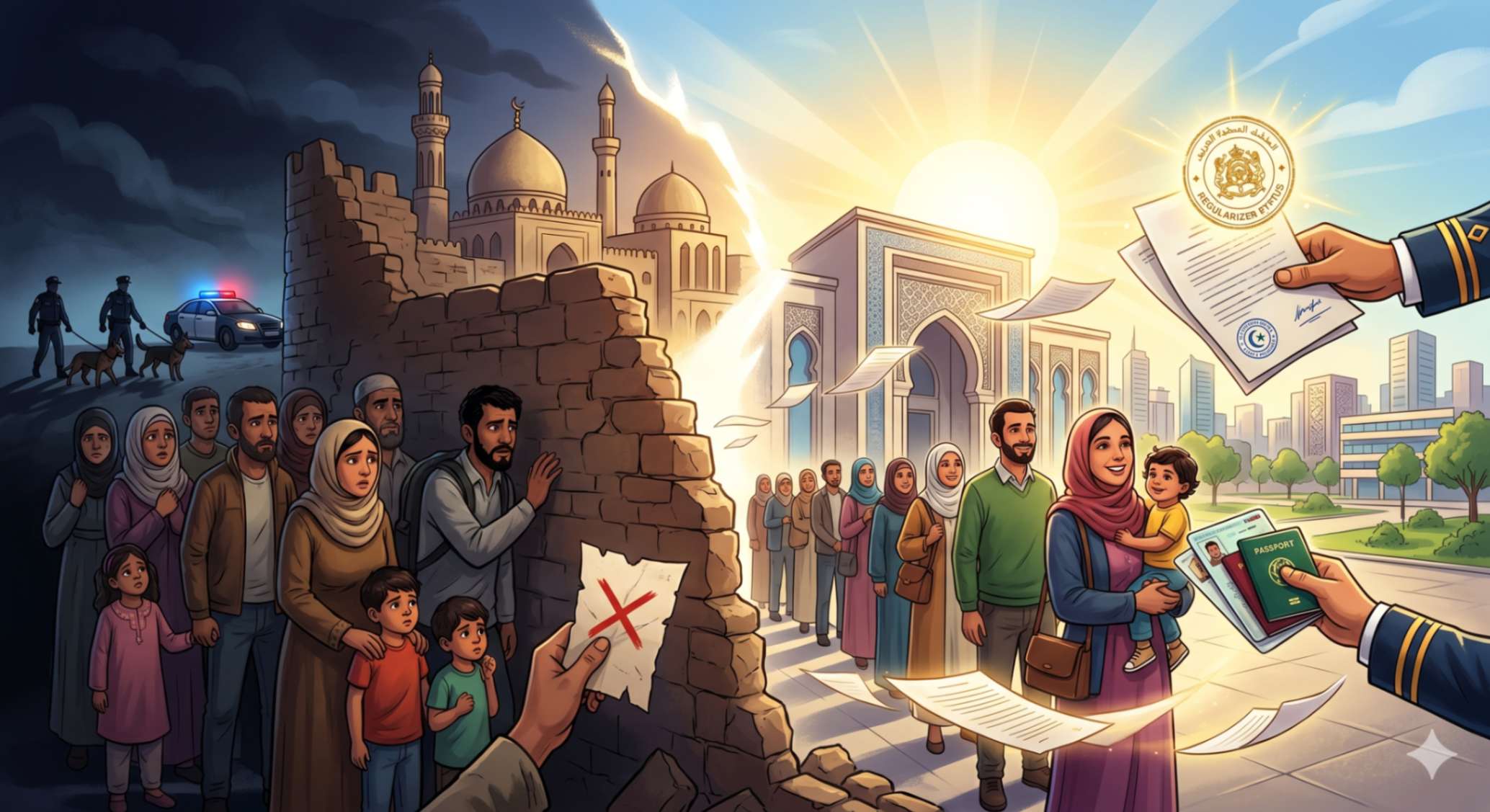
France Regularisation 2026: Work, Family and Humanitarian Routes
A practical guide to France’s exceptional residence routes: shortage-occupation work under L.435-4, family ties, medical grounds, evidence and OQTF decisions.
 Asylum in Europe
French Immigration Law 2024: Asylum Changes in 2026
Understand France’s 2024 immigration law, its constitutional review and the asylum changes introduced by the EU Pact in June 2026.
 Study in Europe
Study in France 2026: admission, tuition and student visa
Updated guide to studying in France: Études en France and DAP routes, 2026/27 tuition, financial proof, student work, housing and CAF, scholarships and post-study residence.
 Asylum in Europe
How to Apply for Asylum in France in 2026
A practical guide to SPADA and GUDA registration, the OFPRA filing deadline, interviews, ADA support, work rules and CNDA appeals.
 Study in Europe
France Scholarships for International Students 2026–27
France scholarships for international students: Eiffel 2027, country-specific BGF awards, Émile Boutmy, Erasmus Mundus, CROUS eligibility and deadlines.
 Work in Europe
Best Job Sites in France 2026: Top Platforms
Compare France Travail, APEC, Indeed, LinkedIn and more. Learn about the Arabic app, work authorisation, CVs and job search from abroad.
 Asylum in Europe
Asylum in France 2026: Eligibility, Process & Rights
Updated guide to asylum in France: protection criteria, SPADA and GUDA registration, OFPRA applications, deadlines under the rules effective June 2026, CNDA appeals, ADA, healthcare, work and family reunification.
France Guide: Work, Study, Visas, Asylum and Living
A practical reference for newcomers, students, job seekers and residents. It brings together core country facts, current official figures and links to the specialist guides already published on this site, while distinguishing general rules from exceptions.
Key facts about France
- Capital
- Paris
- Official language
- French
- Currency
- Euro (€)
- Political system
- Semi-presidential republic
- Administrative regions
- 18
France at a glance
France is a semi-presidential republic and a member of the European Union, the euro area and the Schengen Area. Paris is its capital, French is the official language and the euro is its currency. The country has 18 administrative regions: 13 metropolitan regions and five overseas regions. Some immigration, administrative and social rules differ in overseas territories from metropolitan France.
Population and country data
INSEE estimated France's population at 69.082 million on 1 January 2026. This is a provisional estimate, not a final census count. This guide does not publish a single total for the Arab community: official French statistics classify people by nationality, country of birth or other defined statistical categories, which do not necessarily form one consistent category called 'Arabs'.
Work and the labour market
In many cases, nationals from outside the EU, EEA and Switzerland need a work authorisation before taking up employment, usually requested by the employer, unless their visa or residence permit already grants work rights or an exemption applies. Exceptions depend on nationality, permit type and bilateral arrangements; Algerian nationals are subject to specific rules. Check the applicable route before starting work. Job seekers can use France Travail, employer career pages and professional networks.
Pay and the legal minimum wage
From 1 June 2026, the gross minimum wage in metropolitan France and most specified territories is €12.31 per hour, or €1,867.02 gross per month based on a 35-hour week. The ministry reports an estimated monthly net amount of €1,477.93. Mayotte has a separate minimum rate, so this figure should not be applied to every territory. INSEE reports median private-sector net pay of €2,238 per month in 2025 on a full-time-equivalent basis (EQTP), compared with an average of €2,797. The median is the midpoint of that statistical distribution, not a salary guarantee for a particular occupation or a newly arrived worker.
Study and universities
France has public universities, grandes écoles and private institutions. Admission, language requirements and fees vary by programme and institution. For 2026–27, national reference fees at public higher education institutions under the ministry for students from outside the EU, EEA and Switzerland are €2,902 per year for a bachelor's degree, €3,950 for a master's and €398 for a doctorate. Exemptions may apply based on status or institutional policy, and many institutions or programmes fall outside the uniform schedule. Service-Public states that foreign students generally need to demonstrate resources of at least €615 per month; check current visa and application requirements before applying.
Scholarships and funding
Funding opportunities include French government schemes, Eiffel scholarships, embassy programmes, universities and research institutions. Eligibility, deadlines and coverage vary by nationality, residence, degree level and subject. Do not assume a scholarship covers every expense: check whether it includes tuition, accommodation, insurance, travel and monthly living support with the awarding body.
Asylum and international protection
The usual asylum process starts with a first-reception structure (SPADA), followed by an appointment at the one-stop asylum office (GUDA) or the applicable regional pathway. The file is then examined by OFPRA, the French Office for the Protection of Refugees and Stateless Persons. In the standard route, the OFPRA form must generally be sent within 21 days after the asylum application certificate is issued; specific arrangements apply in some areas and cases. A refusal may be appealed to the National Court of Asylum (CNDA). In metropolitan France and French Guiana, the appeal period is generally one month in the normal procedure and 10 days in certain accelerated or border procedures; different rules may apply in other territories. Deadlines are strict and depend on the procedure and notification; seek qualified legal or specialist-association help promptly.
Visas and residence permits
Start by identifying the legal purpose of the stay: study, employment, self-employment, family, visit or protection. Depending on the route, a long-stay visa (VLS-TS) or residence permit may be required, followed by validation or renewal within the applicable deadlines. Work, family-reunification and travel rights depend on the document held. In certain circumstances, an EU long-term resident card may be available after five years of lawful and continuous residence, subject to resources, health insurance and other conditions; it is not automatic merely because five years have passed.
French citizenship and naturalisation
Routes to French nationality include naturalisation by decree and declaration procedures, such as marriage or descent, each with separate requirements. From 1 January 2026, applicants for naturalisation and reintegration, as well as certain marriage declarations, must demonstrate French at B2 level in speaking and writing. A civic examination is also required for naturalisation and reintegration applications. Language alone is not sufficient: residence, integration, resources, legal history and other route-specific conditions are assessed.
Healthcare and health insurance
The French healthcare system combines mandatory health insurance and complementary coverage. The universal health protection scheme (PUMa) can cover people who work in France or reside there on a stable and lawful basis, subject to eligibility and registration rules. This does not mean every service is entirely free: co-payments or complementary insurance may still matter. Registration steps differ for students, employees and people without work.
Tax and financial obligations
Tax residence is determined using criteria such as the household or main place of stay, principal professional activity or centre of economic interests, taking tax treaties into account. Income tax is withheld at source for many employees, but this does not remove the annual filing obligation when one applies. Tax residents and non-residents receiving French-source income may have different obligations. Check impots.gouv.fr rather than inferring tax residence from the length of stay alone.
Housing and everyday life
Renters are commonly asked for identity, income or guarantor documents; leases may require a deposit and supporting paperwork. Housing costs vary substantially by city, neighbourhood and property type, so this guide does not present one national monthly budget or city estimate as if it applied to everyone. Verify the property, landlord, lease and additional charges before transferring money. French language skills make it easier to deal with administration, work and everyday services.
Public services, education and travel
Municipalities and local administrations provide civil-status, school, transport and social services, with details varying by location. France is part of Schengen, but a French residence permit does not automatically grant the right to work or settle long-term in another European country. Short travel is governed by the document held and Schengen rules; moving to another country for work or study requires checking that country's own rules.
Related guides on this website
Official sources
- INSEE – population estimate at 1 January 2026
- European Union – France: political system, regions and EU membership
- Ministry of Labour – minimum wage effective 1 June 2026
- INSEE – private-sector wages in 2025
- Campus France – higher-education tuition fees 2026–2027
- Service-Public – foreign student residence and proof of funds
- OFPRA – how to apply for asylum
- OFPRA – appeal against an asylum refusal and deadlines
- Interior Ministry – French nationality procedures and 2026 requirements
- Interior Ministry – civic examination for nationality applications
- Service-Public – EU long-term residence after five years, subject to conditions
- Assurance Maladie – universal health protection (PUMa)
- Service-Public – work authorisation for foreign employees
- impots.gouv.fr – annual income reporting obligations
This guide is general information, not legal or tax advice and not a guarantee of a visa, job or protection status. Rules depend on nationality, residence status and individual circumstances; exceptions and bilateral agreements may apply. Always confirm details with the competent authority and the latest legal text.
Editorially reviewed: 16 November 2026. Recheck changing figures before making financial or legal decisions.