
Switzerland
Your guide to life, work and study in Switzerland.
Arab presence
Around 80,000 to 100,000 people of Arab origin
Approximate figure
Best cities (per person/month)
- ZurichCHF 3,000 - 3,800
- GenevaCHF 2,800 - 3,500
- BaselCHF 2,600 - 3,300
- BernCHF 2,500 - 3,200
- LausanneCHF 2,500 - 3,100
Real opportunities
Average salaries
Average gross CHF 6,900 - 7,000/month, net CHF 5,400 - 5,800 (CHF 85,000 - 120,000/year for specialists)
Varies by qualification, experience, and company size.
Articles
asylum-in-switzerland-guide
 Daily life
Opening a Bank Account in Switzerland: Requirements, Documents and Steps
Learn how to open a bank account in Switzerland, including common requirements, documents, costs, residence considerations, online applications and practical steps for foreigners, workers and students.
 Study in Europe
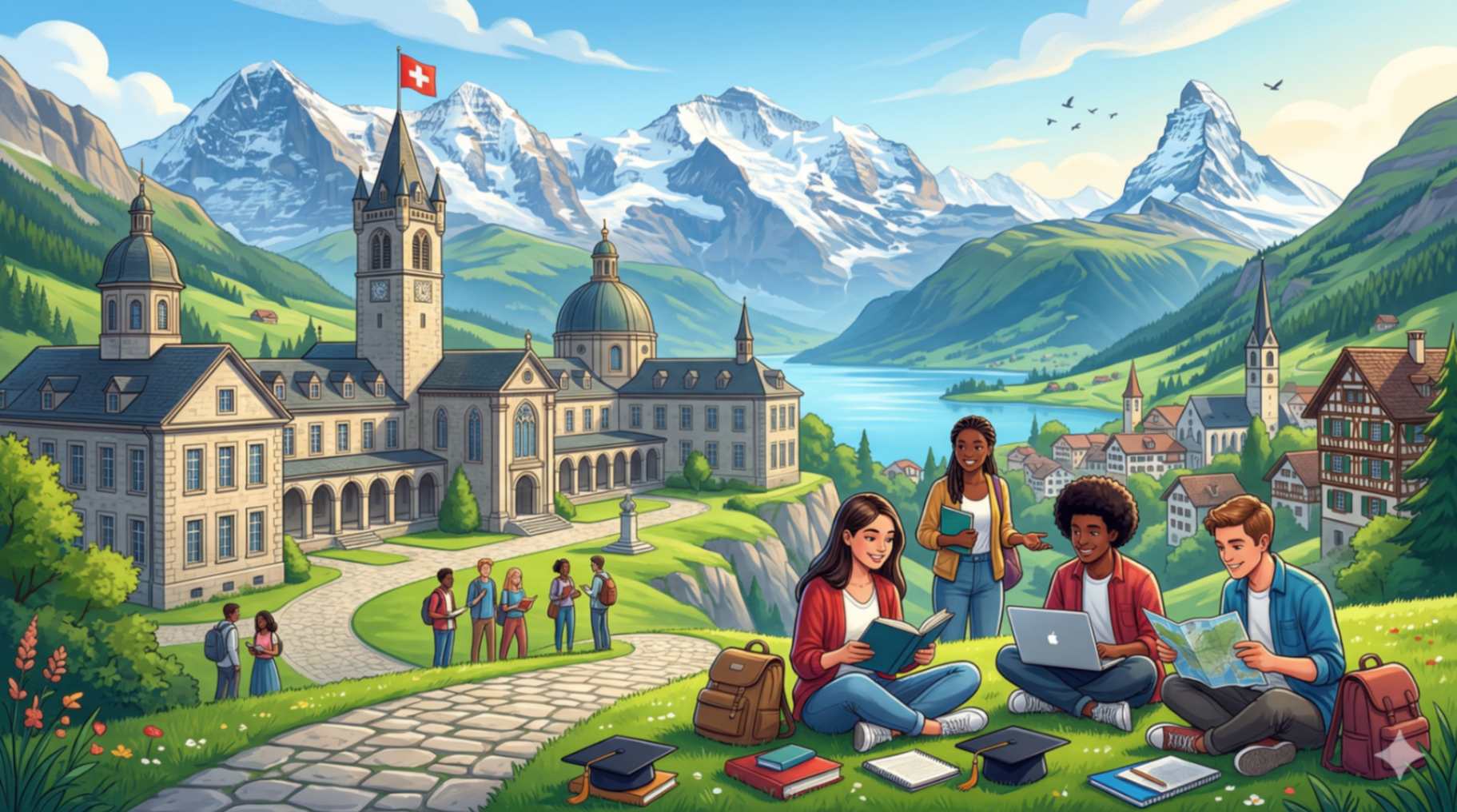
Study in Switzerland 2026: The Comprehensive Guide (Admissions, Costs, Visa, and Top Universities)
A comprehensive guide to studying in Switzerland 2026: admissions, tuition and living costs, visa, top universities, scholarships, and post-graduation work.
 Work in Europe
In-Demand Jobs in Switzerland: Careers, Skills and Work Opportunities in 2026
Discover the most in-demand jobs in Switzerland in 2026, including healthcare, IT, engineering and skilled professions, plus work permit and qualification recognition guidance.
 Study in Europe
Costs of Studying in Switzerland: Tuition Fees, Living Expenses and Budget Planning
Discover the real costs of studying in Switzerland, including 2026–27 university tuition fees, living expenses, housing, health insurance, scholarships and budget planning for international students.
 Asylum in Europe
How to Apply for the US DV Lottery 2027 from Switzerland: Step-by-Step Guide
A comprehensive guide for Arabs residing in Switzerland on how to apply for the US Diversity Visa (DV Lottery 2027). Requirements, steps, and the status of asylum seekers.
 Asylum in Europe
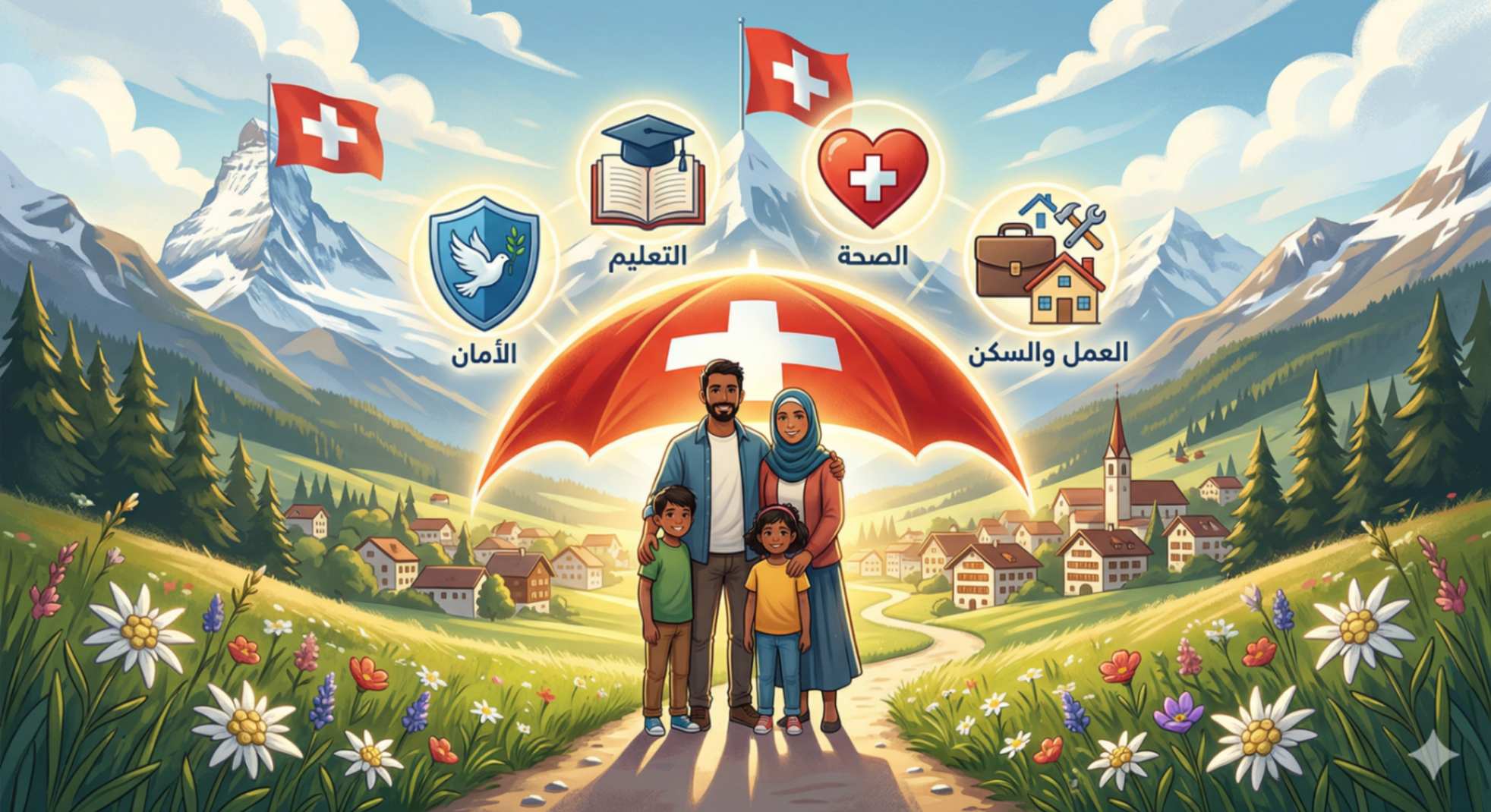
Refugee Rights in Switzerland 2026 – Complete Guide from Residency to Family Reunification
A comprehensive guide on refugee rights in Switzerland in 2026. Learn the difference between Permit B and F, financial allowances, housing, work, and family reunification conditions.
 Asylum in Europe
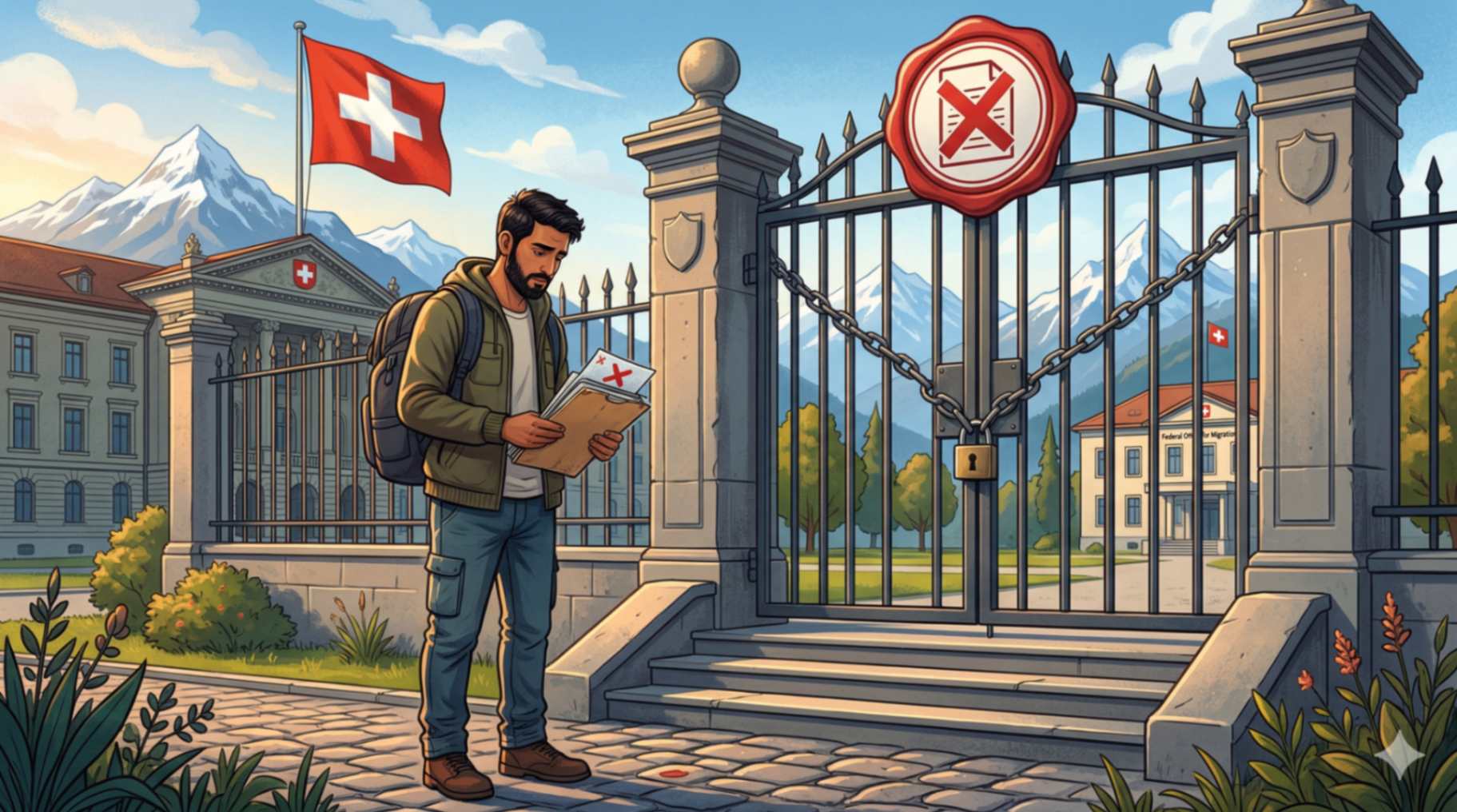
Asylum Rejection Reasons in Switzerland: 20 Common Causes and How to Avoid Them (2026 Guide)
Discover the top reasons for asylum rejection in Switzerland in 2026. A comprehensive guide to avoiding mistakes in SEM interviews, Dublin fingerprinting, safe countries, and how to appeal.
 Work in Europe
Work in Switzerland for Arabs 2026: Comprehensive Guide (Visas, Professions, and How to Get a Job)
A detailed and comprehensive guide to working in Switzerland for Arabs in 2026: including work visas, in-demand professions, salaries, how to write a CV, and succeeding in job interviews.
 Study in Europe
Best Universities in Switzerland 2026: Comprehensive Guide for International Students (Rankings, Majors, & Admissions)
A comprehensive and detailed guide to the best universities in Switzerland 2026 for international and Arab students: Global rankings, top majors, admission requirements, and tuition costs.
 Work in Europe
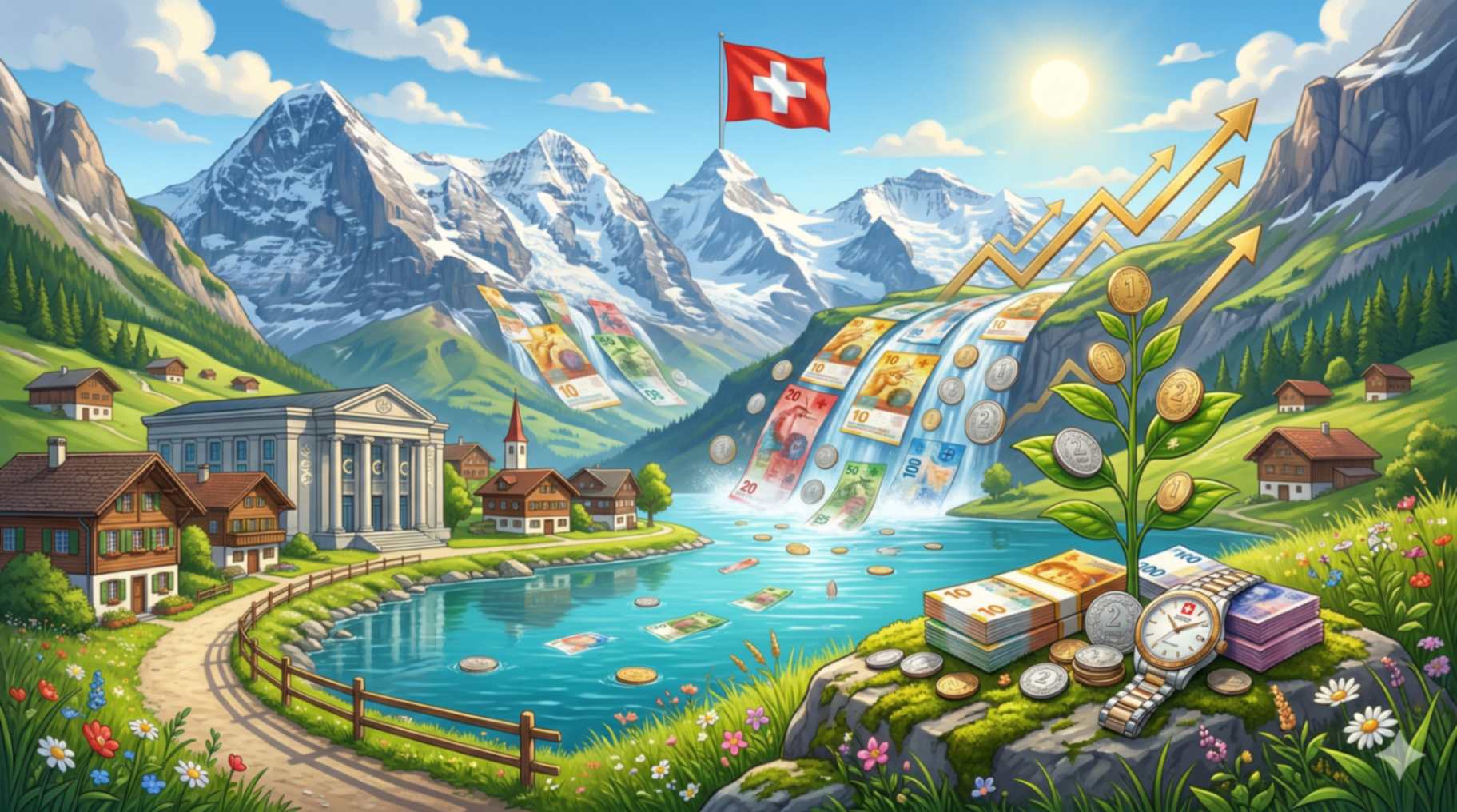
Salaries in Switzerland 2026: Comprehensive Guide (Average Salaries, Taxes, and Net Salary Calculation)
A comprehensive 2026 financial guide to salaries in Switzerland: average wages by sector and city, mandatory deductions, tax at source, health insurance, net salary calculation, realistic budgets for singles and families, and the best negotiation tips.
 Asylum in Europe
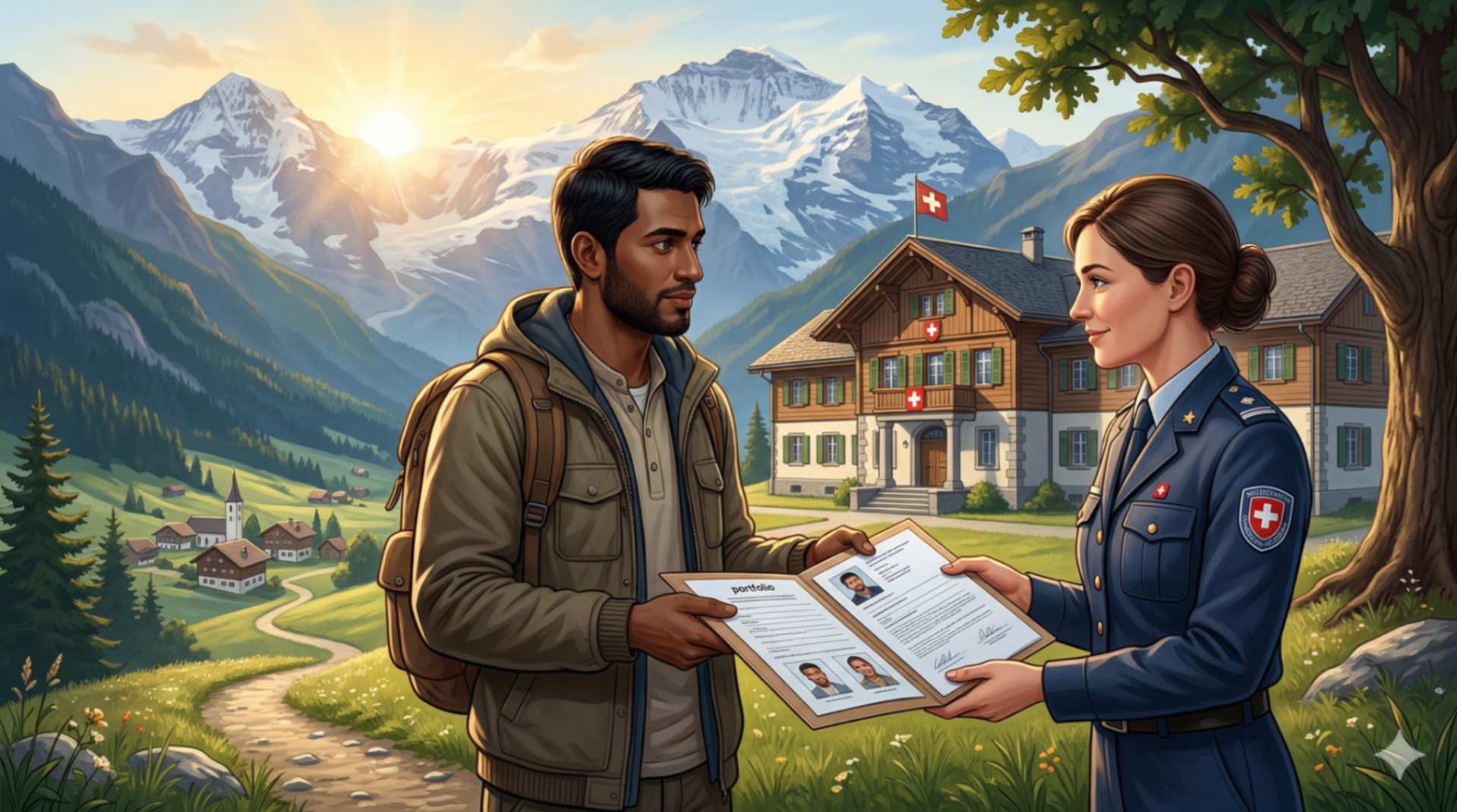
How to apply for asylum in Switzerland: The complete step-by-step guide (2026)
A detailed practical and legal guide to applying for asylum in Switzerland 2026: registration at the BAZ, SEM interviews, Dublin, benefits, housing and work, decisions (B/F/refusal), appeals, and common errors that cause rejection.
The complete Switzerland guide: Europe’s stable and high-quality core
Switzerland is one of the most stable and prosperous countries in the world. With iconic Alpine landscapes, a strong economy, and a unique political model, it has become a dream destination for professionals, students, and investors from across the globe. This guide covers the essential pillars you need to understand Switzerland in full.
Geography and climate
Switzerland is located in central Europe and borders Germany, France, Italy, Austria, and Liechtenstein.
- Nature: the Alps cover around 60% of the country, alongside major lakes such as Lake Geneva and Lake Zurich.
- Climate: generally temperate but highly elevation-dependent; colder snowy winters in mountain zones and milder summers in many urban regions.
Political and administrative system
Switzerland is a federal republic known for direct democracy, where citizens vote directly on major laws and policy decisions through referendums.
- Cantons: Switzerland has 26 cantons, each with substantial autonomy over local law and taxation.
- Neutrality: Switzerland is famous for political and military neutrality. It is not an EU member, but it maintains strong bilateral agreements and is part of the Schengen area.
Languages and culture
Switzerland recognizes four official languages:
- German: about 62% of the population (with Swiss-German dialects widely used).
- French: about 23%, concentrated in the west (Geneva and Lausanne).
- Italian: about 8%, mainly in the south (Canton Ticino).
- Romansh: below 1%, spoken in selected Alpine areas.
Economy and labor market
- Currency: Swiss franc (CHF), one of the strongest currencies globally.
- Leading sectors: pharmaceuticals, fintech, luxury watches, and tourism.
- Labor market: low unemployment (around 4%), but highly competitive and strongly skills-driven.
Education and healthcare
- Education: strong public education system and globally ranked universities such as ETH Zurich and EPFL.
- Healthcare: excellent but expensive. Basic insurance (KVG) is mandatory for all residents and purchased individually from private insurers.
1. Arab presence in Switzerland
- Estimated size: around 80,000 to 100,000 people of Arab origin (out of roughly 2.5 million foreign residents).
- Concentration: mainly in French-speaking regions such as Geneva and Lausanne, in addition to Zurich.
- Profile: many work in medicine, diplomacy, international organizations, and multinational companies, with a notable student segment in higher education.
2. Best cities and monthly living costs (single person)
Switzerland is one of the world’s most expensive countries. A moderate monthly budget for a single resident usually falls between CHF 2,500 and CHF 3,500 (including housing, insurance, and food).
| City | Average monthly cost (CHF) | Main advantage |
|---|---|---|
| Zurich | 3,000 - 3,800 | Largest financial and technology hub |
| Geneva | 2,800 - 3,500 | Home to many international organizations |
| Basel | 2,600 - 3,300 | Leading pharmaceutical and chemical center |
| Bern | 2,500 - 3,200 | Administrative capital with calmer lifestyle |
| Lausanne | 2,500 - 3,100 | Innovation ecosystem and technical universities |
3. Real opportunities in the job market
Switzerland faces a clear shortage of skilled labor. The most realistic opportunities for foreign professionals are concentrated in:
- IT: software engineering, AI, and cybersecurity.
- Healthcare and life sciences: specialist physicians, nursing, biotech research.
- Finance and banking: financial analysis, compliance, wealth management.
- Engineering: mechanical engineering and renewable energy.
4. Average salaries in Switzerland
- Average gross salary: around CHF 6,900 to CHF 7,000 per month.
- Average net salary: around CHF 5,400 to CHF 5,800 per month.
- Annual range for specialists: typically CHF 85,000 to CHF 120,000, with potential to exceed CHF 150,000 in advanced medical and high-end tech positions.